
MIT’s Qubit Arcade
Lead Engineer & Product Designer | MIT Research Laboratory of Electronics 2020 - 202
Qubit Arcade is an MIT-led initiative (RLE / Open Learning) developed to demystify the mechanics of quantum circuit design through multiplayer VR. Collaborating with Professor William Oliver (Director of the Center for Quantum Engineering) and Chris Boebel (Media Development Director at MIT Open Learning), I led the design and engineering of a tool that allows students to manipulate qubits, construct complex circuits, and execute them on MIT’s actual quantum hardware all from within a virtual environment
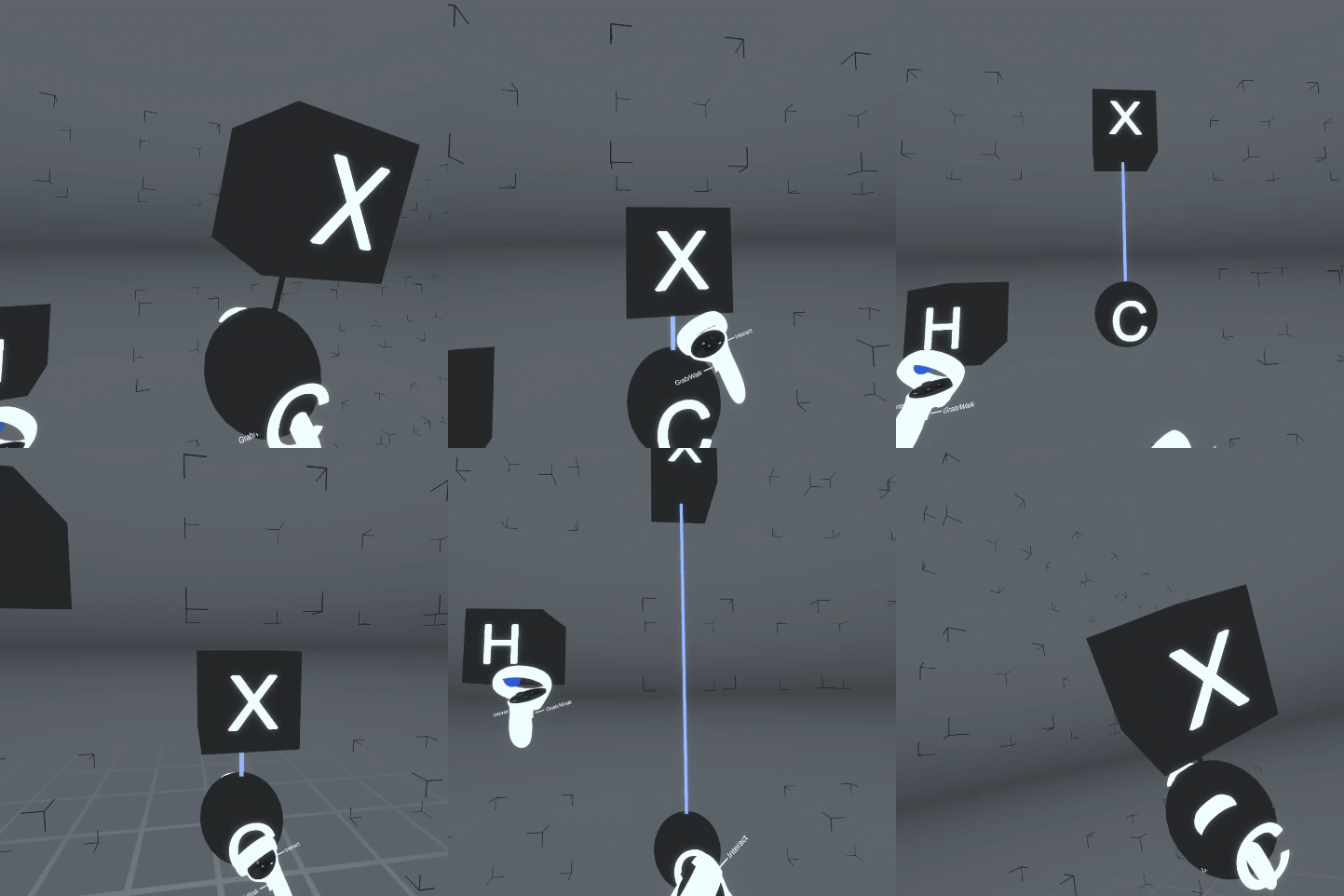
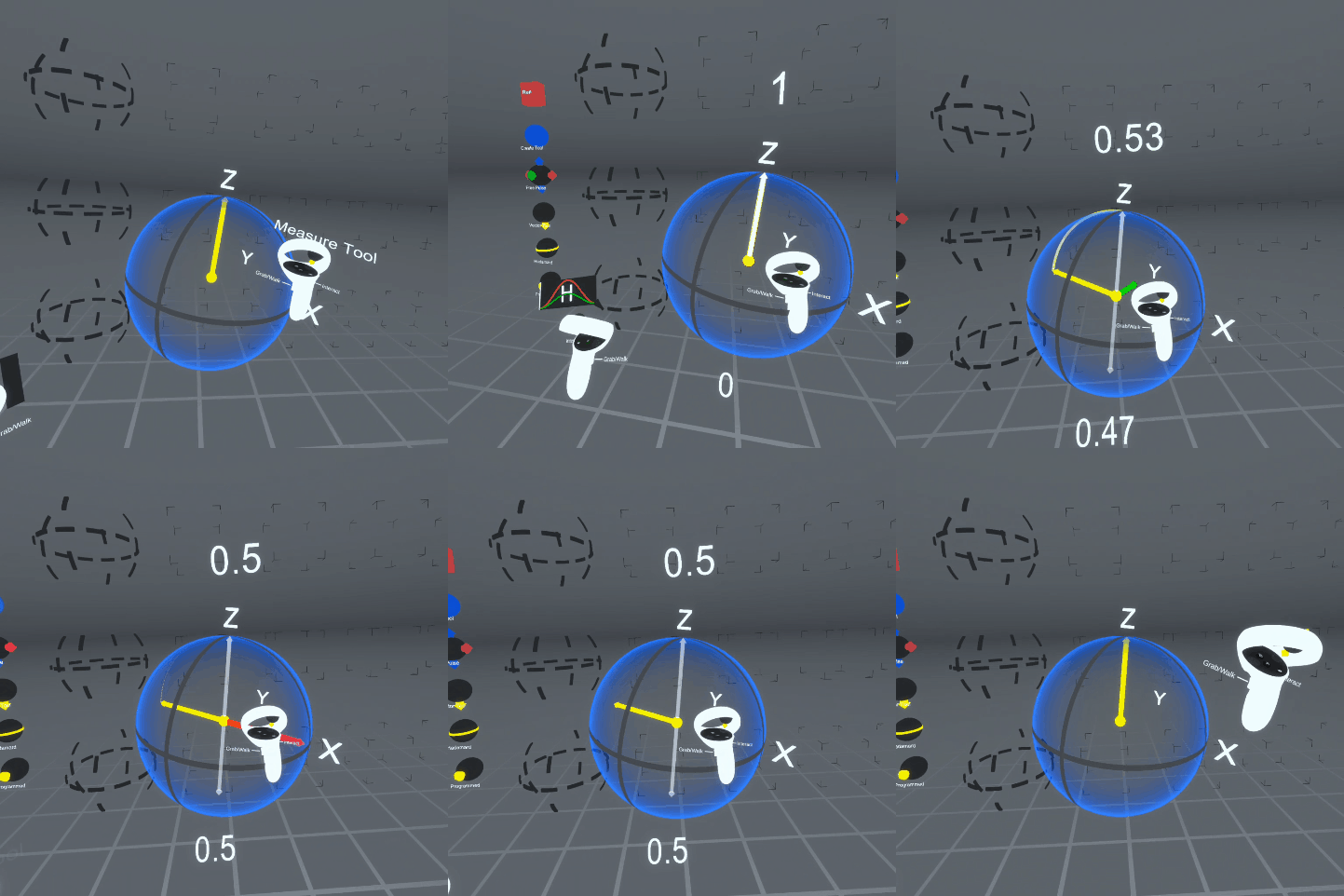
Phase I: Defining the Spatial Language of Qubits
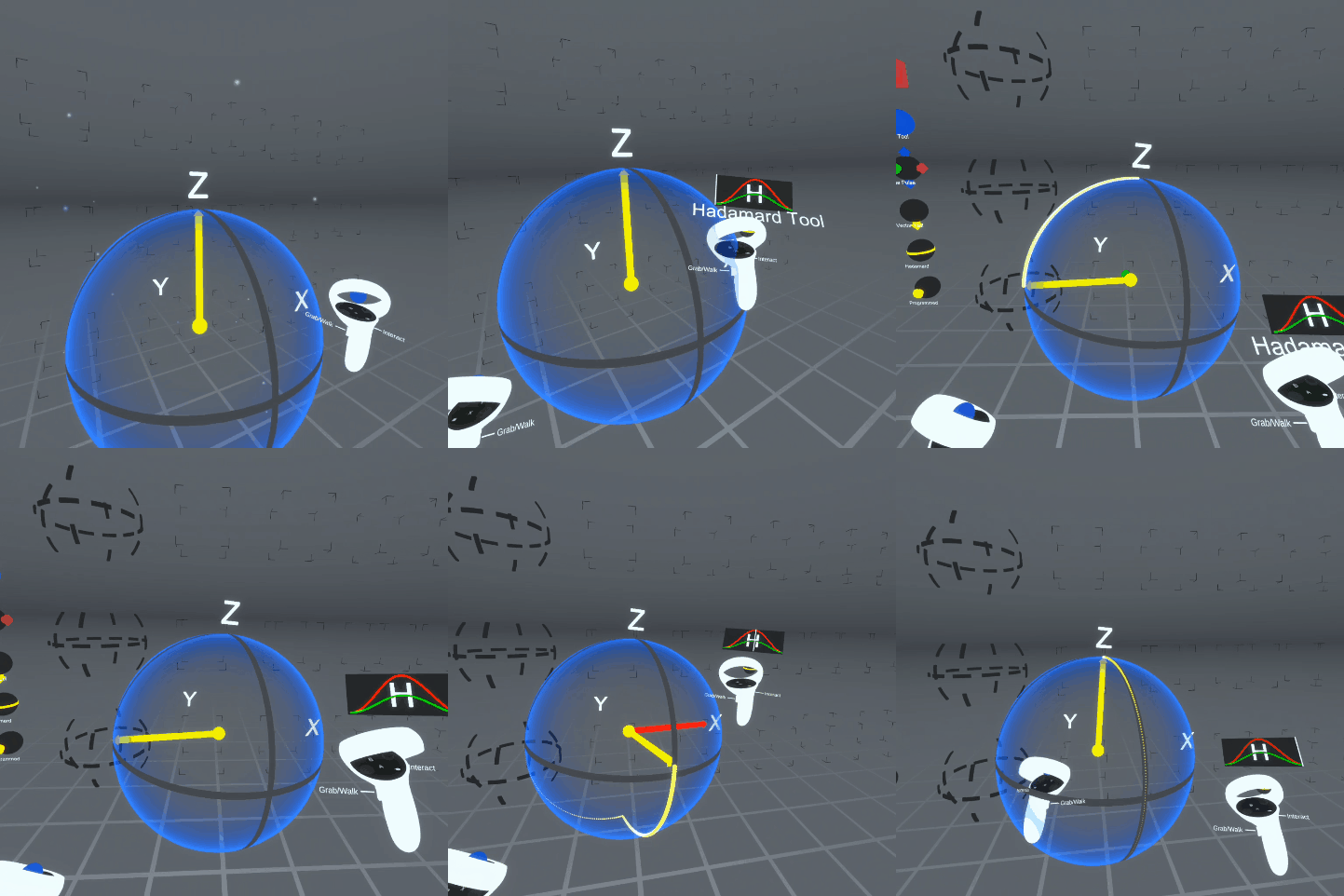
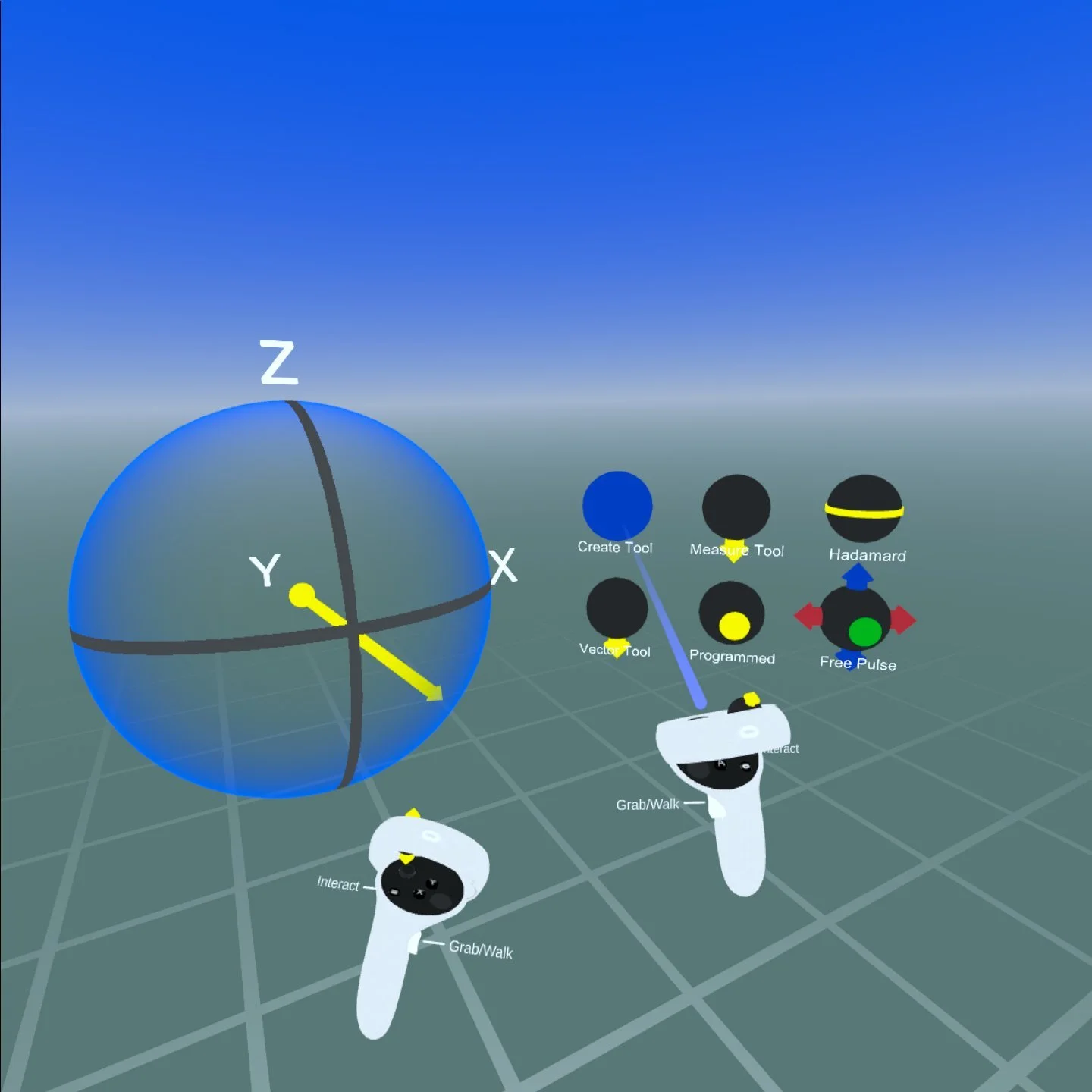
Quantum mechanics is notoriously difficult to visualize. My first challenge was to design a new interaction language that translated the abstract mathematical properties of a qubit (such as superposition and the Bloch Sphere) into a tactile, spatial experience.
Rapid Prototyping: As the sole engineer, I moved quickly from the conceptual design phase to a high-fidelity VR prototype, allowing the team to iterate on the "feel" of qubit manipulation and ensure we were building correct physical intuition.
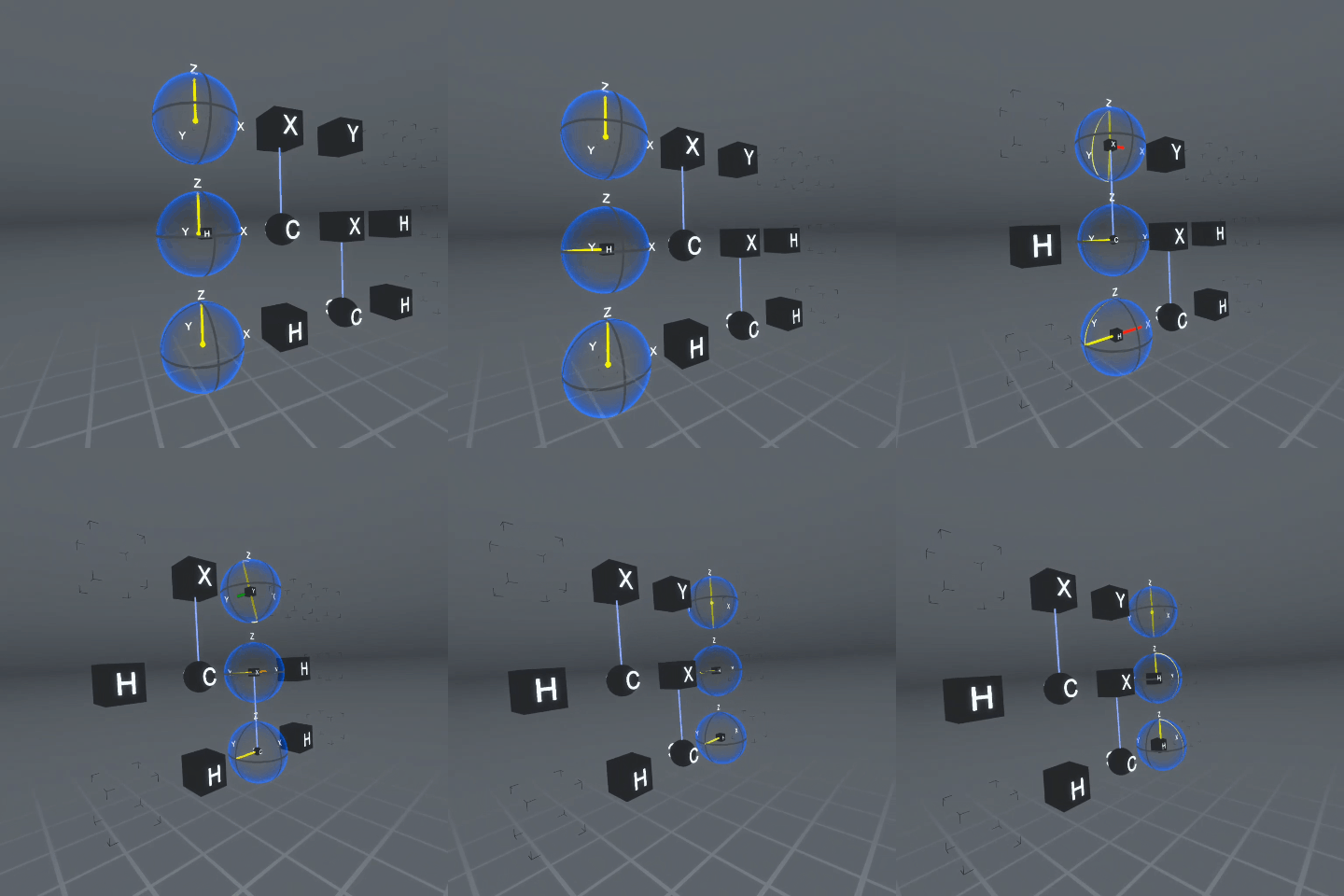
Phase II: Collaborative Circuit Design & "Musical" UX
Building on the foundational interactions, we needed a way for multiple users to collaboratively build quantum circuits in real-time.
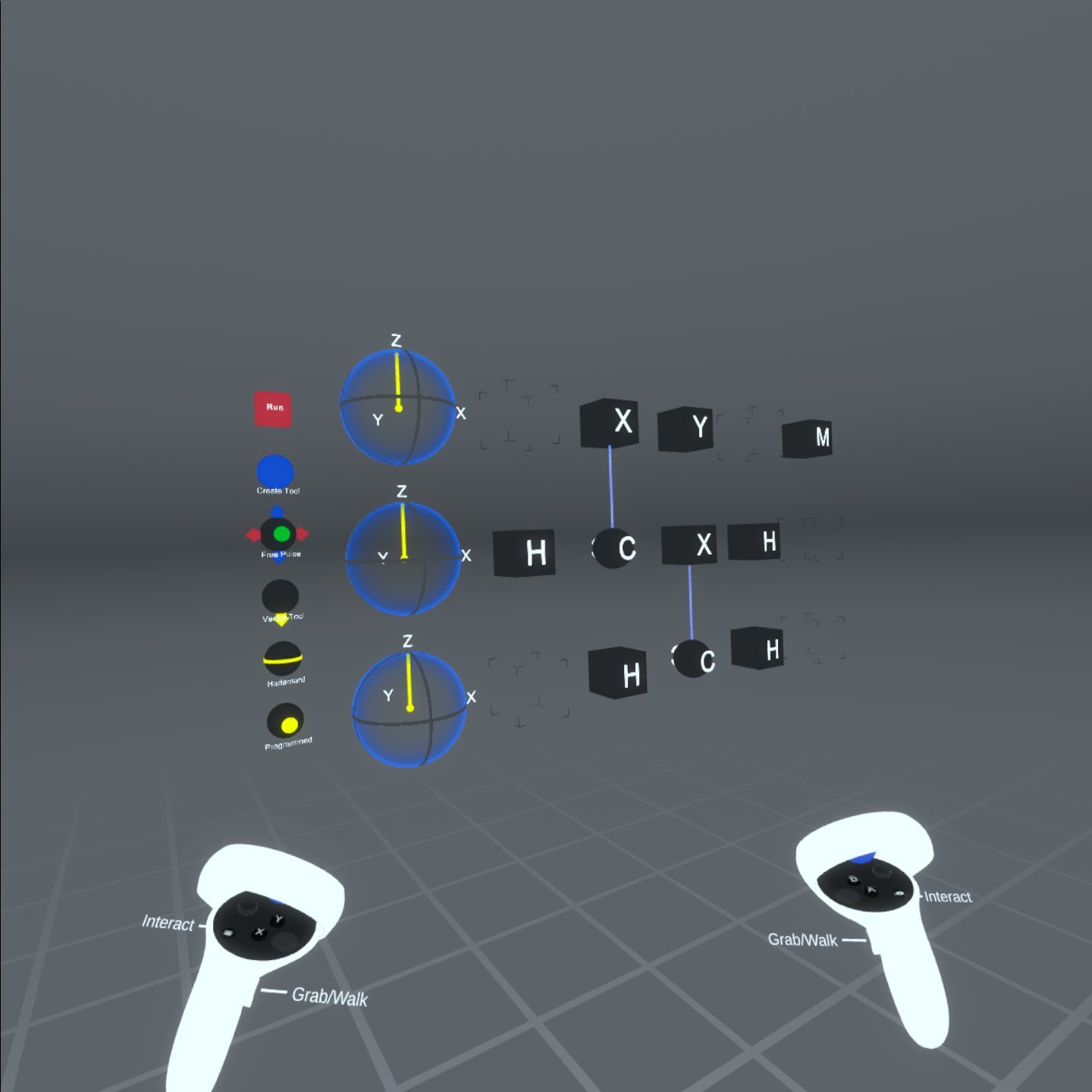
The "Score-Based" Paradigm: I co-designed a UI that borrows inspiration from musical scores and node-based programming. By placing quantum gates onto parallel "tracks," users can visualize the linear progression of a circuit and the resulting alterations to the quantum state.
Spatial Programming: This approach allows students to "program" through physical interaction, making the logic of quantum gates feel as intuitive as arranging notes on a staff.
Phase III: Real-Time Networking & Hardware Integration
The final phase focused on technical performance and bridging the gap between VR and laboratory hardware.
Multiplayer Synchronization: I implemented a low-latency networking architecture that enables real-time collaboration, allowing a classroom of students to see and modify the same circuit simultaneously.
The Hardware Pipeline: I developed the communication layer that sends VR-generated circuit commands to MIT RLE’s quantum computers and returns the measurement data to the users in real-time.
Impact: Qubit Arcade has successfully demonstrated how immersive technology can bridge the gap between complex mathematical theory and physical intuition, providing MIT physics students with a revolutionary new way to master the fundamentals of quantum computing.
Why Quantum?
Quantum Computing has rapidly become one of the most promising – and publicized – areas of computer research. As such, they have the potential to radically improve how we solve certain computational problems. Therefore, just as any student at MIT (or another technical university) should be expected to have a basic understanding of a computer “bit” and how it enables computers to perform algorithms using binary calculations, we believe we are approaching a time when these same students should be able to explain the workings of a “qubit” – the quantum computing equivalent – and how qubits work alone and together to execute quantum algorithms.
Qubit Arcade is a collaboration between MIT.nano, MIT Open Learning, and NCSOFT.